
- Online Slots at Cobber Casino: What’s Actually in the Lobby and How to Play It Well
- What Makes a Slots Lobby Worth Using
- The Mechanics Nobody Explains Properly
- The Actual Types of Slots You’ll Find
- Bonus Features Worth Understanding Before You Rely On Them
- Providers Actually Worth Recognising
- Building an Actual Session Strategy
- Jackpot Slots: How the Pool Actually Works
- Playing on Mobile
- A Straight Word on Playing Responsibly
Online Slots at Cobber Casino: What’s Actually in the Lobby and How to Play It Well
Ask ten New Zealand punters what they want from an online pokies lobby and you’ll get ten slightly different answers, but a few things come up again and again: games that load properly on a phone with patchy reception, honest information about how the machines actually pay out, and enough variety that you’re not stuck rotating through the same three fruit machines every weekend. That’s the standard this page is written against. Below is a genuinely detailed look at how slots work at Cobber Casino, what separates a well-built game from a lazy one, and how to approach your bankroll so a session stays fun instead of turning into a slog.
None of this is filler copy written to hit a word count. If you’ve got five minutes, you’ll walk away knowing more about paylines, volatility, and jackpot mechanics than most players who’ve been spinning reels for years.
What Makes a Slots Lobby Worth Using
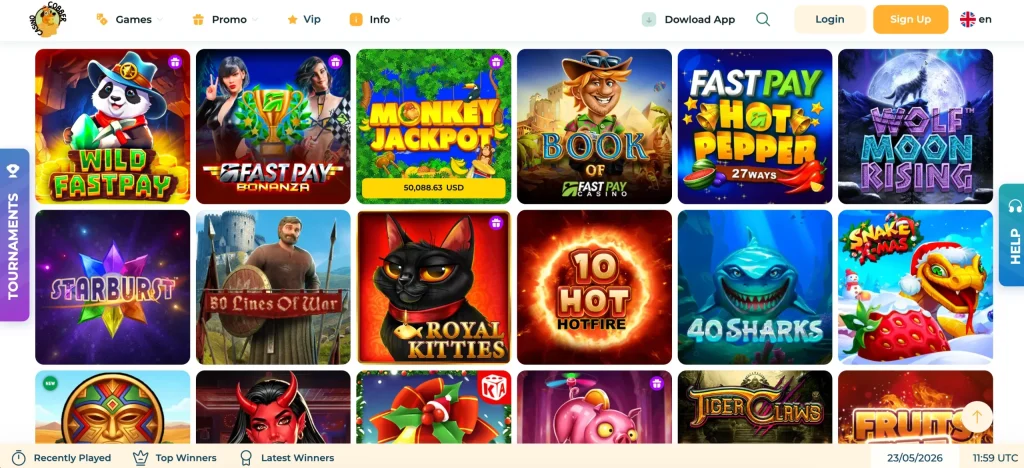
A lot of online casinos treat their slots page as a dumping ground: hundreds of tiles, no real sorting logic, half the game info missing or wrong. That approach saves the operator time and costs the player theirs. Cobber Casino’s lobby is built around actual filtering, by provider, by volatility, by feature type, so you’re not scrolling through 40 screens to find a Megaways title or a low-variance classic slot you can play for an hour without your balance disappearing in ten minutes.
Load speed matters more than people give it credit for. Every game here runs on HTML5, which means no Flash, no plugin downloads, and none of the ten-second spinner delays you get on older casino builds when you’re on 4G in the back of a car heading to Wanaka. Desktop and mobile use the same game files, so switching between a laptop at home and a phone on the bus doesn’t change how the game behaves, your session doesn’t reset, and the graphics don’t get dumbed down for the smaller screen.
The Mechanics Nobody Explains Properly
Before getting into game types, it’s worth actually understanding what’s happening behind the reels, because most sites skip this and it’s the part that helps you play smarter.
Every slot runs on a Random Number Generator (RNG), a piece of software that produces thousands of number sequences per second even when nobody’s playing. The moment you hit spin, the RNG locks in a result instantly, the reels spinning on your screen are purely visual, the outcome was decided before the animation even started. This is why there’s no such thing as a slot being “due” for a win, no pattern to spot, and no benefit to switching machines because one “feels cold.” Each spin is statistically independent of the last.
Two numbers actually matter when judging a slot’s fairness and behaviour:
RTP (Return to Player) is the theoretical percentage of all money wagered on a game that gets paid back to players over millions of spins. A 96% RTP means that, over a very long run, the game returns $96 for every $100 wagered across all players combined. It says nothing about your individual session, you could lose ten spins in a row on a 98% RTP game and hit a big multiplier on a 94% one. It’s a long-run average, not a promise.
Hit frequency is a separate figure that tells you how often a spin results in any win at all, regardless of size. A game can have a high RTP but a low hit frequency, meaning long dry spells punctuated by bigger payouts, or a lower RTP with frequent small wins that keep the balance topped up without ever producing a big hit. Some game info screens list this directly, others don’t, but you can get a feel for it within the first fifty or so spins of any title.
Volatility (or variance) ties these two together. It describes the shape of the payouts, not just the average.
| Volatility Level | What a Session Feels Like | Bankroll Strategy | Best Suited To |
|---|---|---|---|
| Low | Frequent small wins, gentle swings, balance rarely dips fast | Smaller, consistent bets stretch a session for longer | Players who want steady play without big highs or lows |
| Medium | A mix, some dry spots, some solid multipliers | Standard flat betting, adjust after a losing run | Most casual players, the safest default choice |
| High | Long stretches of nothing, then a sizeable payout | Needs a bigger buffer, bet smaller relative to bankroll | Players comfortable riding out losses for the chance of a big multiplier |
| Very High | Rare hits, but some can pay hundreds of times the stake | Strict loss limits are essential here | Jackpot chasers and thrill seekers who accept most sessions end in a loss |
If a game’s info page lists volatility as a star rating (common with Pragmatic Play titles) or a numeric scale, that’s a faster way to judge fit than guessing from the theme or graphics.
The Actual Types of Slots You’ll Find
Games get lumped together under “slots” even though the mechanics differ a lot. Knowing the categories helps you find what actually suits you rather than clicking randomly.
- Classic three-reel slots. Simple, usually 3 to 9 paylines, symbols like bars, sevens, and bells. Lower complexity, often (but not always) lower volatility, and a good fit if you want fast rounds without decoding a bonus buy menu.
- Video slots. Five reels or more, structured paylines or “ways to win” (sometimes both), plus wilds, scatters, free spin rounds, and multipliers layered on top. Most of the interesting game design in the last decade has happened here.
- Megaways and dynamic-reel slots. The number of symbols per reel changes on every spin, which changes the total number of ways to win, sometimes into the tens of thousands. Originally a Big Time Gaming mechanic, now licensed across dozens of studios. High volatility as a rule.
- Cluster-pay and grid slots. No traditional reels at all, symbols drop into a grid and winning clusters (usually five or more matching symbols touching) explode and get replaced by new ones falling from above, sometimes chaining several wins from a single spin.
- Progressive jackpot slots. A slice of every wager across a network of linked games feeds a shared prize pool that keeps climbing until triggered, sometimes through a bonus round, sometimes at random.
- Branded slots. Licensed from a film, band, or TV series, generally with stronger production value (voice acting, licensed audio) but not necessarily better math models, worth checking RTP separately from the presentation.
Most players settle into two or three of these categories once they’ve played enough to know their own patience level for dry spells versus their appetite for a big multiplier.
Bonus Features Worth Understanding Before You Rely On Them
Free spins, wilds, and multipliers get promised on every slot’s loading screen, but they don’t all work the same way, and knowing the difference changes how you judge a game.
Wilds substitute for other symbols to complete a winning line, but “expanding wilds,” “sticky wilds,” and “walking wilds” behave very differently in practice. A sticky wild stays locked in place for multiple spins, which can meaningfully lift the RTP of a bonus round compared to a standard wild that only affects one spin.
Scatters typically trigger the free spins round regardless of where they land on the reels, and the number needed (usually 3, sometimes with a “bonus buy” option to skip straight there for a fee) is listed in the paytable.
Multipliers can apply to a single win, a whole spin, or accumulate across a bonus round. A 2x multiplier sounds modest until it’s stacking with three others in a cascading grid slot, at which point the swings get large fast.
Bonus buy features, common in Pragmatic Play and Hacksaw Gaming titles, let you pay a flat multiple of your stake (often 100x) to jump straight into the bonus round instead of waiting for scatters to land naturally. These carry real financial risk precisely because the entry cost is fixed and high, they’re a different kind of bet than a standard spin, not an “upgrade” to one.
Providers Actually Worth Recognising
Game studios vary enormously in how carefully they build their math models and how polished the actual product feels. A handful of names come up consistently enough that recognising them is a genuinely useful shortcut when picking a new game.
| Provider | Reputation | Typical Feel |
|---|---|---|
| Pragmatic Play | Prolific, frequent releases, strong tournament support | Bold visuals, mostly medium-high volatility, popular bonus buy options |
| NetEnt | Long-running, known for polish | Cinematic themes, smooth animation, consistently strong audio design |
| Play’n GO | Story-driven design | Reliable bonus mechanics, strong mobile optimisation |
| Big Time Gaming | Invented the Megaways mechanic | High variance, huge win ceilings, not for the faint-hearted |
| Push Gaming | Newer, design-forward studio | Clean interfaces, transparent math, well-regarded among experienced players |
| Relax Gaming | Publishes its own titles plus partner studios | Wide variety, fast release schedule, inconsistent quality across partner content |
| Hacksaw Gaming | Known for irreverent themes and high volatility | Chunky wins, heavy bonus buy focus, not a low-variance choice |
When two games look identical in theme but come from different studios, the provider is usually the better signal of quality than the marketing screenshots.
Building an Actual Session Strategy
Nobody beats the house edge over the long run, that’s just how the maths of RNG gambling works, and any suggestion otherwise isn’t honest. What you can control is how deliberately you play, which affects whether the session stays enjoyable regardless of the outcome. Here’s a sequence that holds up better than clicking into whatever game has the flashiest thumbnail:
- Decide your session budget before opening a single game, in actual dollars, not “however much feels right in the moment.” Write it down if that helps you stick to it.
- Run a few titles in demo mode first. Most slots let you play with virtual credits, which is the only way to actually feel a bonus round’s pacing and volatility without spending anything to find out.
- Check RTP and volatility on the info screen (usually an “i” icon near the settings menu) for anything you’re considering playing with real money.
- Start with smaller stakes for the first 20 to 30 spins on a new title, this tells you more about its actual behaviour than any description ever will.
- Decide your stopping conditions in advance, both a loss limit and a win target, and treat hitting either one as the actual end of the session, not a suggestion.
- Avoid chasing losses with bigger bets. This is the single most common way a manageable session turns into a bad one, and it rarely recovers the way it feels like it should in the moment.
- Take breaks between sessions, ideally a full day or more. Slots are designed to be engaging, that’s the whole point of the game design, which is exactly why deliberate breaks matter more here than with most forms of entertainment.
None of this changes the underlying odds. What it does is keep the decision-making in your hands rather than the momentum of the session.
Jackpot Slots: How the Pool Actually Works
Progressive jackpots run on a slightly different mechanism than standard slots, and it’s worth understanding before assuming a small bet gives you full access to the advertised prize.
A percentage of every wager placed on a linked jackpot network (sometimes a single game, sometimes dozens of games sharing one pool) gets added to a prize fund that keeps growing until someone triggers it. Triggers vary: some are tied to a specific bonus round, others fire completely at random on any spin regardless of bet size, and some require a maximum or near-maximum stake to even qualify for the top-tier prize.
A few practical points if jackpot slots interest you:
- Check the terms for minimum qualifying bets. Some jackpots pay a reduced prize, or none at all, if you’re not wagering at or near the maximum stake.
- Jackpot slots generally run a slightly lower base RTP than standalone titles of a similar type, because a cut of every spin feeds the growing pool rather than the immediate payout table.
- Odds on major jackpots sit in lottery territory, genuinely long odds, so these are best treated as entertainment with an outside chance attached, not a plan.
- Once triggered, the jackpot resets to a seed value and starts climbing again, so a pool that’s sat unclaimed for months (visible on the game’s jackpot counter) is a different proposition to one that reset last week.
Playing on Mobile
Most sessions these days happen on a phone rather than a desktop, and the build here reflects that: every slot runs directly in a mobile browser, no app download, no storage taken up, no forced updates. Landscape orientation generally gives the fullest view during bonus rounds, especially on Megaways titles where the reel grid stretches wide, though portrait mode works fine for quicker sessions where you’re not fussed about seeing every symbol at once.
Touch response is generally solid across both iOS and Android, autoplay settings and bet sizing sit within a tap or two rather than buried three menus deep, and switching from mobile to desktop mid-session (same account, same balance) works without any friction.
A Straight Word on Playing Responsibly
Pokies are entertainment, and the sessions that stay enjoyable are the ones where that stays true the whole way through. If a session stops feeling good, or you notice yourself increasing bets specifically to chase back losses, that’s the actual signal to stop, not a reason to push one more spin further.
Deposit limits, loss limits, and self-exclusion tools exist for exactly this reason, and using them isn’t an admission of a problem, it’s the same basic discipline as setting a budget before a night out. If gambling starts affecting your finances, mood, or relationships beyond what feels manageable, the Gambling Helpline (0800 654 655) offers free, confidential support in New Zealand any time, no obligation attached.
Slots at Cobber Casino are built to be genuinely fun when played on your own terms, with the odds understood rather than ignored. Play within a budget you’ve actually set in advance, treat bonus rounds and free spins as the enjoyable bonus they are rather than the point of the exercise, and if a particular provider or game style clicks with you, that’s a far better sign of a good match than chasing whatever jackpot happens to be biggest that week.

Bonus Roundup October 2026